



Drone Surveying: Insite
SPITFIRE HOMES
Little Impney
Surveying the starting point for a new village within the wider regeneration of the Impney Estate
Little Impney is the latest feature in our Insite series, a monthly look at live developments and the role survey data plays in helping teams understand sites, manage change and make better decisions. Drone Surveying recently completed a baseline survey of the proposed 127-home Little Impney development, capturing existing conditions before construction begins. While the housing development occupies only part of the wider Impney Estate, it forms a key component of a much larger vision involving the restoration of Impney Hall, landscape recovery, biodiversity enhancement and improved public access across one of Worcestershire’s most significant historic estates.
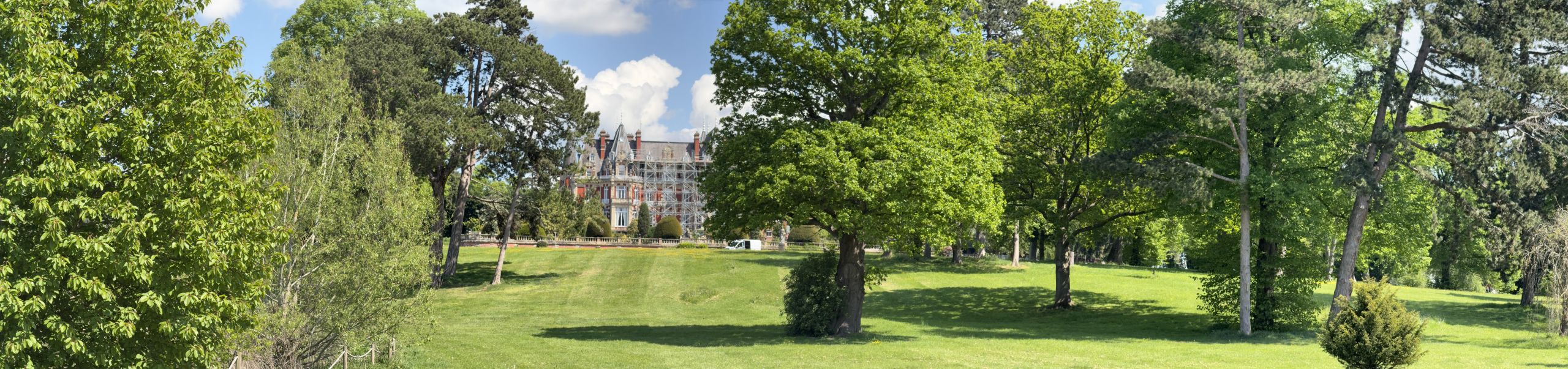 A historic estate entering a new chapter
Few development sites arrive carrying responsibility for more than their own delivery.
At Little Impney, the proposed construction of 127 homes is only one part of a much wider story. Beyond the development boundary lies the future of the Impney Estate itself, a landscape that has evolved through centuries of agricultural, residential, hospitality and commercial use and which remains dominated by the distinctive silhouette of Impney Hall.
For many people, the estate is best known for the former Chateau Impney hotel. Yet the approved vision for the estate extends well beyond a single building. It seeks to secure the future of Impney Hall while restoring historic landscape character, enhancing biodiversity, improving public accessibility and creating a sustainable long-term future for the estate as a whole.
Little Impney forms a crucial part of that strategy. Rather than extending development into the estate’s most sensitive historic parkland, the proposals focus growth within an area associated with former working and productive uses, creating a new village while supporting wider restoration objectives across the estate.
Insite Insight
Development can support restoration
Historic estates often face the challenge of funding long-term restoration and stewardship. At Impney, residential development forms part of the mechanism that helps unlock investment into heritage assets, landscape recovery and environmental enhancement.
The result is a project where housing delivery and conservation objectives are closely linked rather than competing priorities.
The wider Impney Estate vision
The masterplan for the Impney Estate combines heritage, landscape and development into a single long-term strategy. Alongside the proposals for Little Impney, plans include restoration work to Impney Hall, removal of redundant structures, habitat enhancement, landscape recovery and the creation of improved public access routes.
Walking and cycling connections are proposed throughout the estate, helping reconnect people with areas that have historically been inaccessible. Ecological improvements aim to strengthen biodiversity networks, while landscape restoration seeks to reinforce the relationship between the Hall and its surrounding setting.
These ambitions extend beyond the typical scope of a residential development. Success is measured not simply by homes delivered, but by the wider condition of the estate and the quality of the environment that remains long after construction activity has finished.
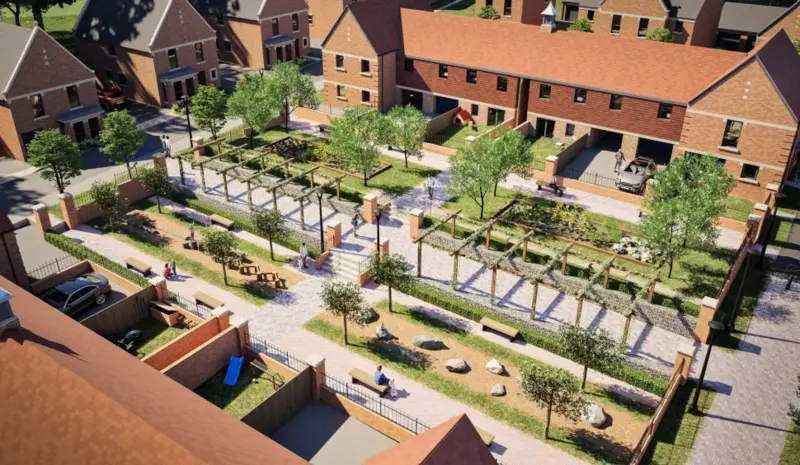

A 127-home village within the estate
The Little Impney proposals will deliver 127 homes together with commercial space arranged around a village square. The development has been designed to reflect the character of the estate’s historic productive landscape while establishing a distinct identity of its own.
Public spaces, planting strategies and pedestrian connections all play a role in shaping the scheme. Existing vegetation, views, drainage patterns and topography have influenced the design process, helping ensure the development responds to its surroundings rather than simply occupying them.
For Spitfire Homes, the challenge extends beyond delivering housing numbers. The development must work as part of a much larger landscape, connecting residential growth with the wider aspirations established across the estate.
That relationship between development and landscape makes an accurate understanding of existing conditions particularly important from the outset.
Our survey: establishing the baseline
Drone Surveying carried out a baseline survey of the site before construction activity commenced.
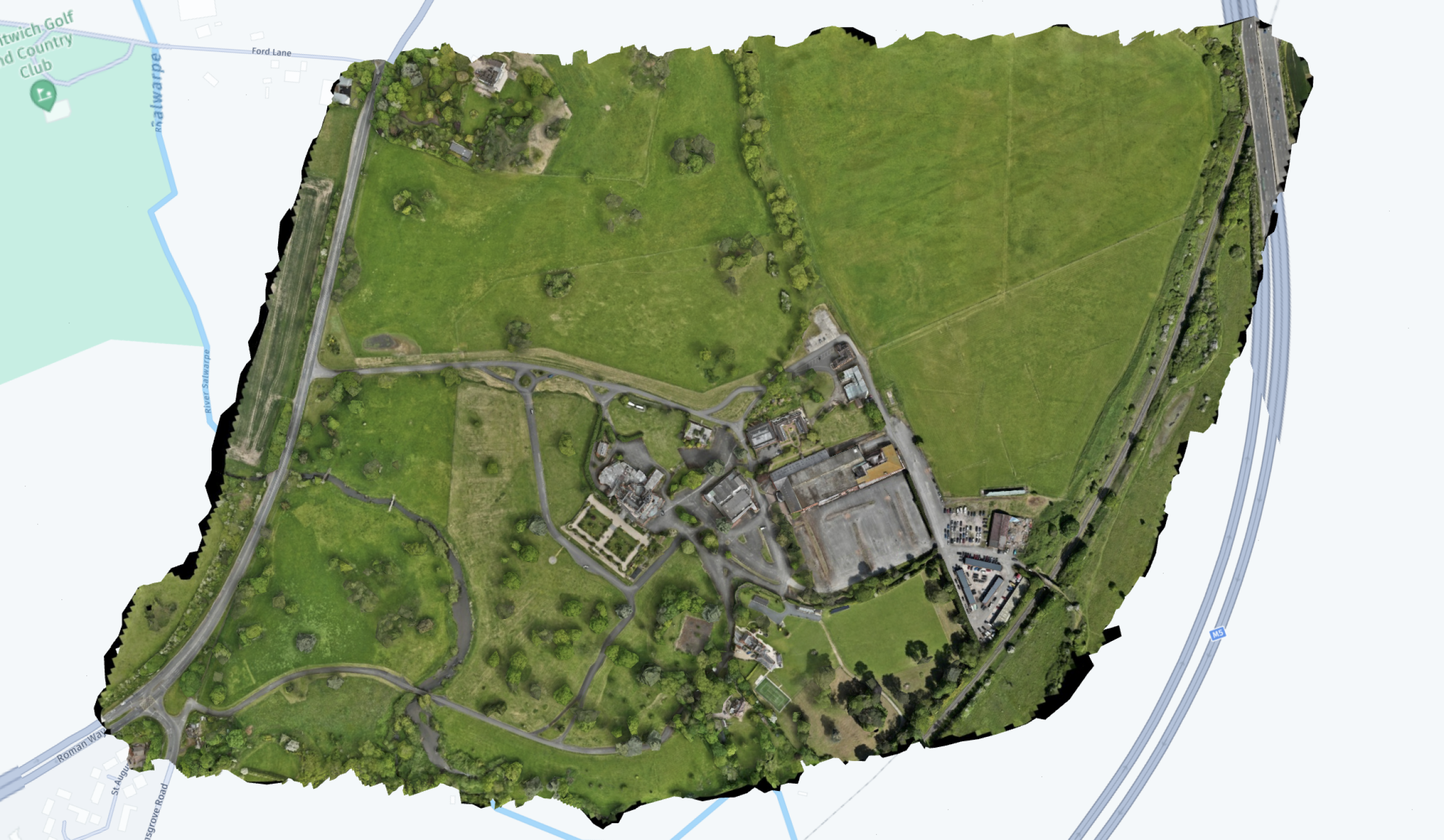
That makes this survey different from a progress monitoring exercise. Rather than documenting change, its purpose is to establish an accurate record of existing conditions before change begins.
The survey captured the development area and surrounding estate context, creating a detailed digital record of topography, landscape structure, vegetation, access routes and existing site conditions. The resulting dataset provides a fixed reference point against which future development can be assessed.
For projects involving environmental enhancement and landscape restoration, that first record often becomes one of the most valuable datasets generated throughout the lifecycle of the scheme.
Insite Insight
The first survey becomes the benchmark
Before construction begins, there is a brief opportunity to capture existing conditions in their entirety. Once earthworks, infrastructure and building activity commence, that original landscape begins to change. Baseline surveys preserve that moment in time.
More than a visual record
The imagery generated through drone surveys is often the most visible output, but the value extends far beyond aerial photography.
Survey outputs can be combined with design information through CAD overlays, allowing proposals to be reviewed directly against existing conditions. Housing layouts, access arrangements, drainage features and landscape interventions can all be assessed within a real-world site model.
For technical and engineering teams, this supports design review and value engineering by providing greater visibility of how proposals interact with the site. Understanding constraints and opportunities early can help reduce uncertainty and support better-informed decisions throughout delivery.
Insite Insight
Understanding the estate as a connected system
Housing, landscape restoration, biodiversity enhancement, access improvements and heritage conservation all influence one another.
Survey data helps create a shared understanding of those relationships, allowing project teams to review proposals within the context of the wider estate rather than focusing solely on individual development parcels.
Measuring environmental enhancement
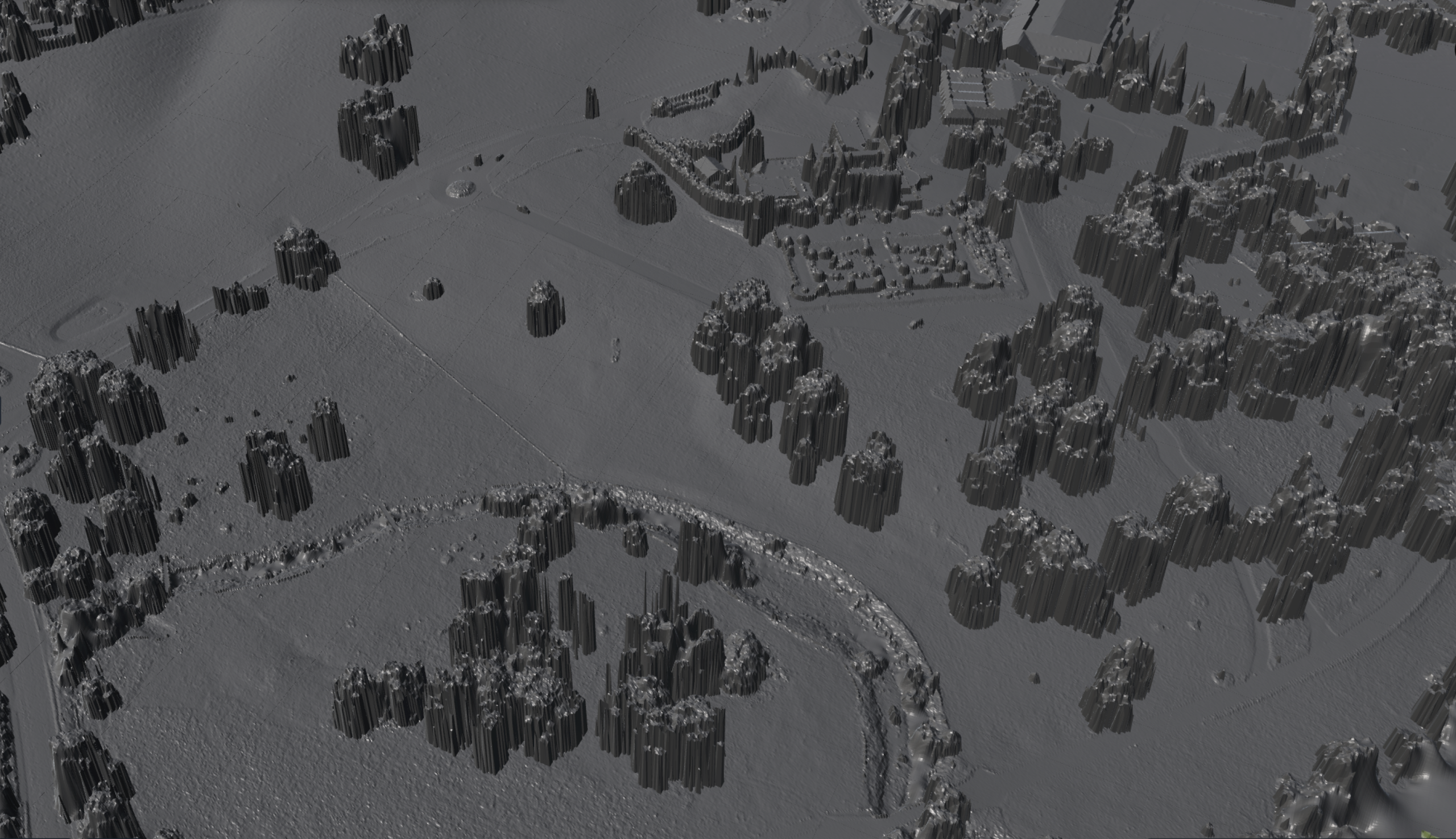
Environmental enhancement is one of the defining themes of the Impney Estate vision. Habitat creation, biodiversity improvements, landscape restoration and improved public access all form part of the long-term strategy for the estate.
The baseline survey establishes the starting point from which those improvements can be measured. Future surveys can be used to review landscape establishment, monitor habitat creation and assess how environmental objectives translate into physical outcomes on the ground.
This creates a measurable record of change that extends far beyond the construction phase, supporting the estate’s stewardship ambitions for years to come.
Insite Insight
Environmental commitments benefit from measurable evidence
Landscape and biodiversity strategies often extend over many years. Repeatable survey data provides an objective way of understanding how those commitments are delivered over time.
Development snapshot
Client
Spitfire Homes
Location
Impney Estate, Droitwich Spa
Development
127 homes and commercial space
Survey Type
Baseline drone survey
Key Themes
Estate restoration, biodiversity, stewardship and housing delivery
Outputs
Orthomosaic imagery, CAD overlays and future comparison baseline
A baseline for the future of the estate
Little Impney represents more than the delivery of new homes. It forms part of a broader vision focused on restoring, enhancing and securing the future of the wider Impney Estate.
Before homes are built, habitats enhanced or landscapes restored, there must be an accurate understanding of what exists today. The baseline survey provides that understanding, creating a record against which future change can be measured as the next chapter of the estate begins.
Further reading
The Little Impney proposals and wider Impney Estate vision have been covered by the estate team, Spitfire Homes and regional media. These sources provide further background on the development, restoration proposals and long-term stewardship plans for the estate.
Explore related pages
To see more of how we support housebuilders and groundworks teams, explore our services, read how it works, browse our projects and case studies, or find out more about our work in photogrammetry, CAD overlays and value engineering.


